25 Years Ago, a $399 Card-Sized Gadget Changed How the World Listens to Music
The original iPod launched in 2001 with 5GB of storage, allowing users to carry 1,000 songs in a device smaller than a modern smartphone.
By Imani Brooks ·
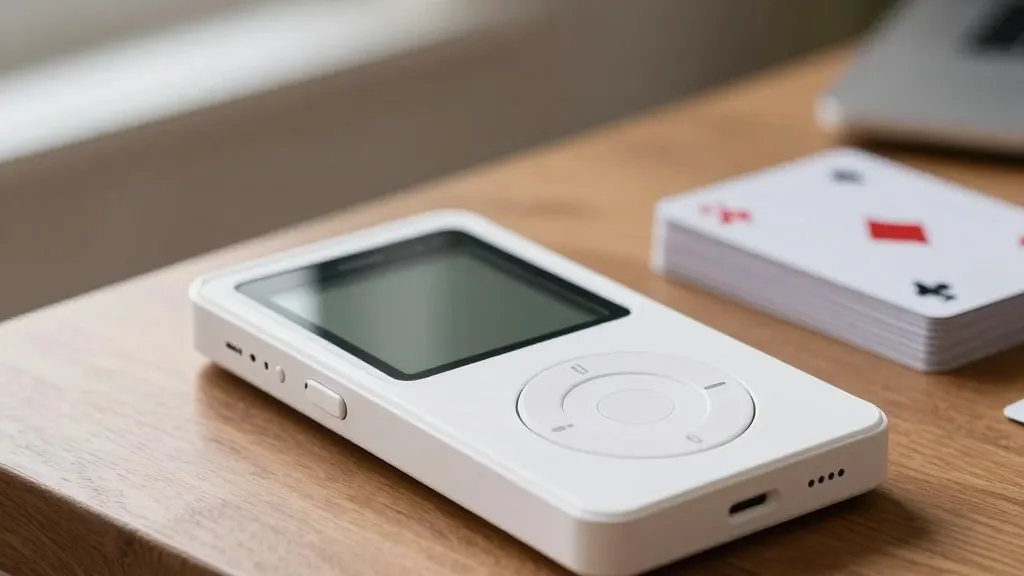
Twenty-five years ago this week, Apple introduced a pocket-sized device that fundamentally altered the music industry by proving that an entire library could fit in your pocket. The original iPod launched in October 2001 at a price of $399, a significant sum at the time, but it offered a compelling value proposition: 5 gigabytes of storage capacity. This allowed users to hold approximately 1,000 songs, specifically standard pop-length MP3s encoded at 160Kbps, effectively replacing the need to carry multiple CD cases or cassettes for daily commutes.
To understand the impact of this release, it is necessary to look at the context of early 2001. Apple had recently recovered from the dot-com bubble burst, having successfully transitioned the brand away from its beige aesthetic with the introduction of the iMac and Mac OS X. CEO Steve Jobs envisioned the Mac as the central hub for a user's digital life, connecting cameras, DVD players, and portable audio devices. While competitors like Sony, Creative, and Sonic Blue already offered portable players, Jobs argued that none had yet perfected the user experience for digital music. He identified hard-disk-based players as the optimal market entry point, surpassing the limitations of flash memory and CD-based solutions available at the time.
The physical design of the first iPod was a direct result of a partnership with Toshiba, which provided an ultra-compact 1.8-inch hard drive only 0.2 inches thick. This component allowed Apple to create a device measuring 2.4 by 4 by 0.78 inches, roughly the size of a deck of cards and weighing just 6.5 ounces. Jobs emphasized that the device was lighter than most cell phones of that era, making it highly portable. The interface featured a piezoelectric clicker and an accelerated scroll wheel, designed for one-handed operation to quickly navigate playlists, artists, or specific tracks. During the initial demonstration, the first song played was 'Building a Mystery' by Sarah MacLachlan.
Performance was a key differentiator, particularly regarding data transfer speeds. The device utilized a FireWire 400 connection, which Apple marketed as the first and only music player to use this technology. Jobs claimed that transferring a full CD of MP3s took only five to 10 seconds, a stark contrast to the five minutes required by standard USB connections of that period. Consequently, filling the entire 5GB capacity with 1,000 songs was estimated to take just 10 minutes, compared to five hours for USB-based alternatives. The device also included 20 minutes of skip protection to maintain audio continuity during movement.
Power management was another critical feature, with a rechargeable lithium-polymer battery providing 10 hours of continuous playback. Apple stated that an empty battery could be recharged to 80 percent in approximately one hour. The launch was synchronized with the release of iTunes 2, which introduced Auto-Sync capabilities. This feature ensured that any music libraries curated on a Mac were automatically mirrored to the iPod whenever the device was connected for charging or data transfer. The iPod also functioned as a FireWire hard disk drive, adding further utility for Mac users.
The iPod line would coexist with the iPhone for over a decade after the smartphone's debut in early 2007, though the iPod's prominence gradually diminished as smartphones integrated music capabilities. The final model, the 7th-generation iPod Touch, was released in May 2019. Although the product line was left largely unmaintained after that point, it was not officially discontinued until May 2022, marking the end of a product line that had defined portable audio for a generation.
Source: Tom's Hardware